
In 2019, we pitched the big one, Kodak.com. Kodak is a company born in Rochester, NY and when I was at Dixon Schwabl we had a long off-and-on relationship with the company. We would do small things that included involvement from Kodak, but when the opportunity to develop the newly designed Kodak corporate website came up we put all of our effort into it.
Around this time Kodak was looking to update the platform their website was built on and they had a specific request. They wanted the back end built in something that can be flexible and easy to maintain, with a front end that was headless and able to display a huge array of components.
Being a large, international company, internationalization was a requirement and we had to be able to author product pages, newsroom posts, and one-off marketing pages in multiple languages.
Kodak had their own designers and writers who were already familiar with the brand, so our role was mostly around the development of the website.
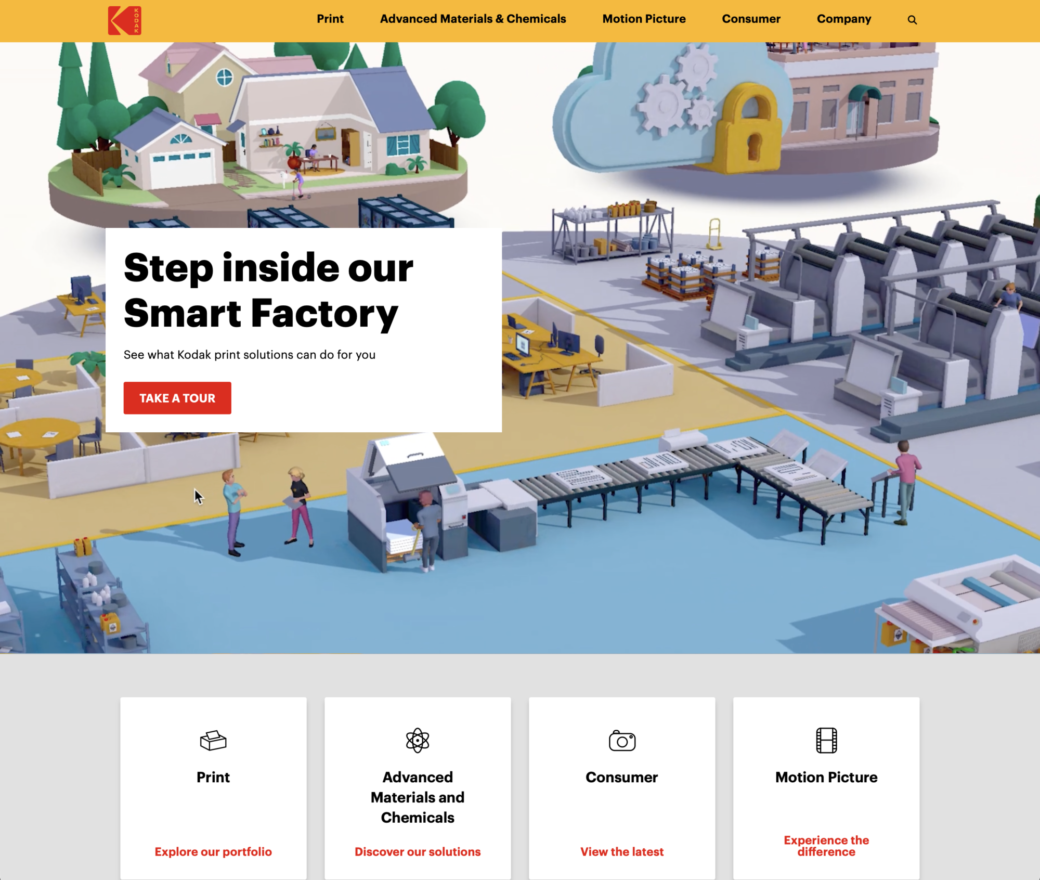
We developed various page types for the site. The homepage was sort of a page builder generic landing page type where it could feature films, videos, products, and one-off experiences.
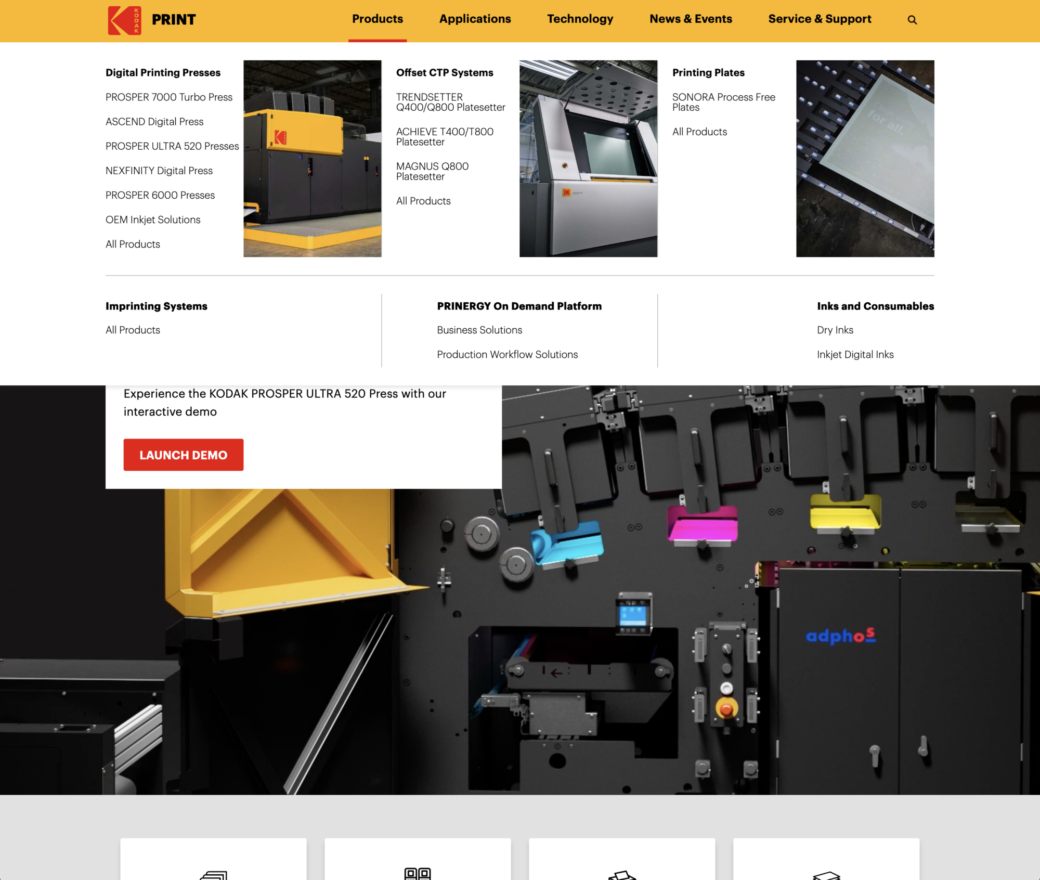
The menu for the site was built in a "mega menu" fashion based on which parent page you were on. In addition to the links in the menu it might show products related to the page you are on or upcoming events.
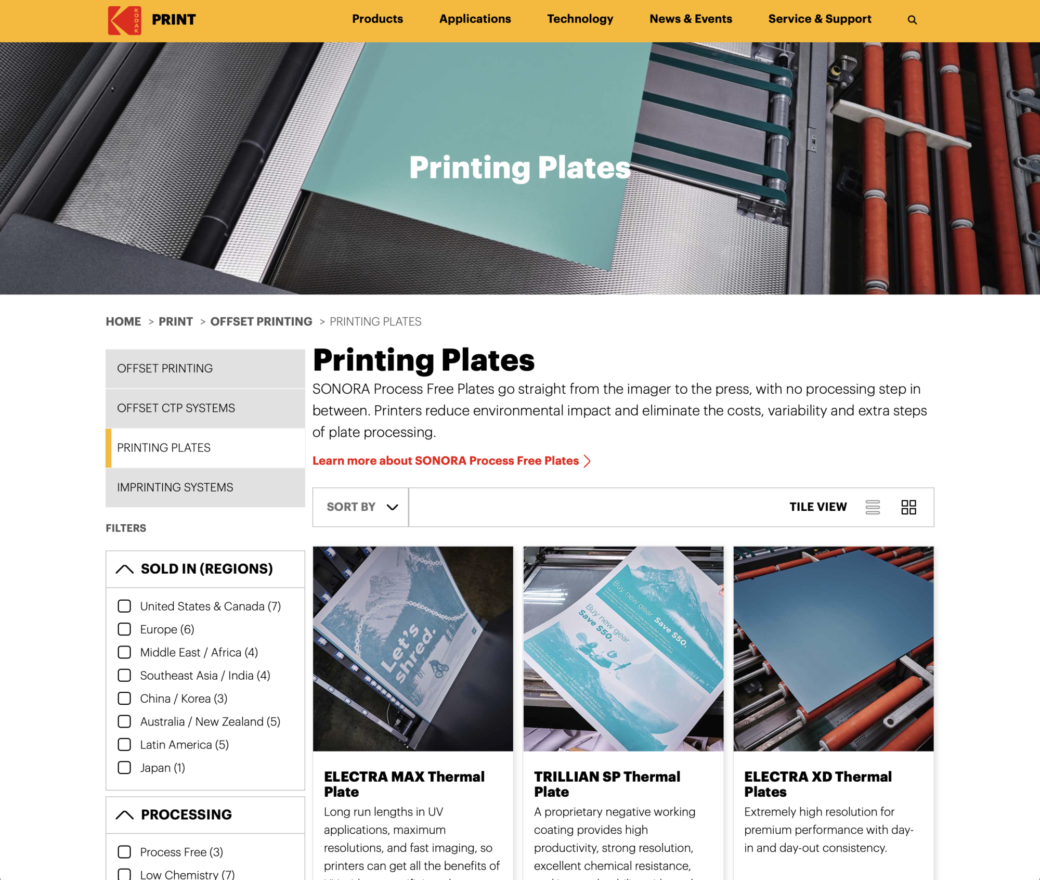
We developed a product filter page that helped you narrow down products based on different features. This was similar to the kind of page you would find on an e-commerce website, letting you filter down products based on dimension or by feature. The product pages had a specific format where they included images of the product, product specifications, and the ability to download manuals and brochure PDFs.
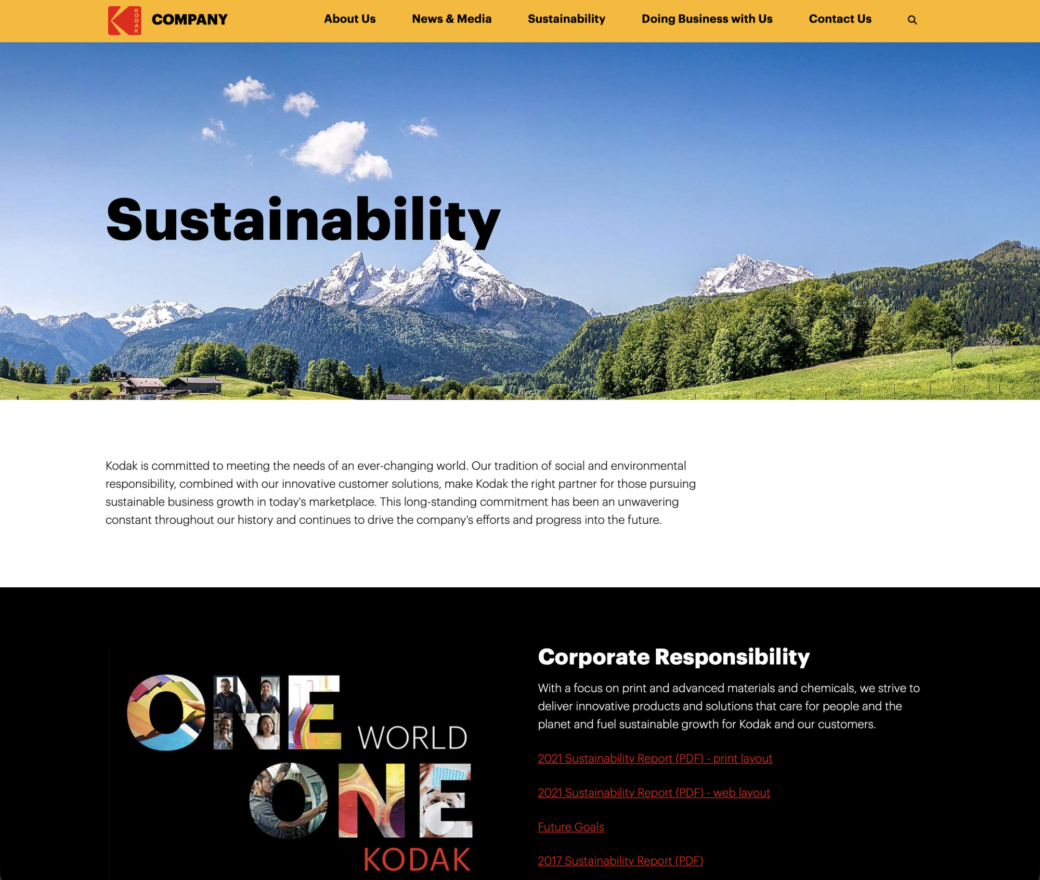

Other pages inside of the site used the most epic page builder I've ever created. We had recursive components and layout options that provided the content authoring teams with plenty of layout options. The designers at Kodak did a great job organizing their work so we had consistent typesetting and color patterns to work from. For certain components we created every variation you can think of from black on yellow, red on yellow, yellow on black, etc...
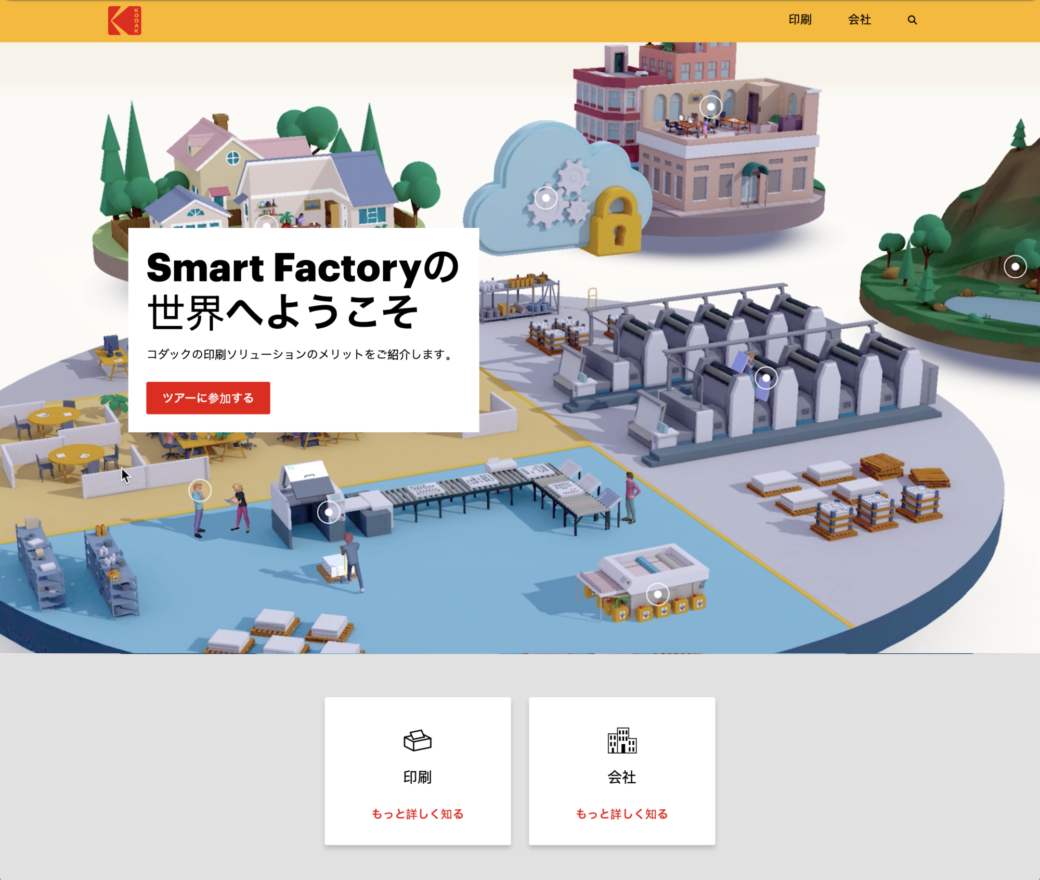
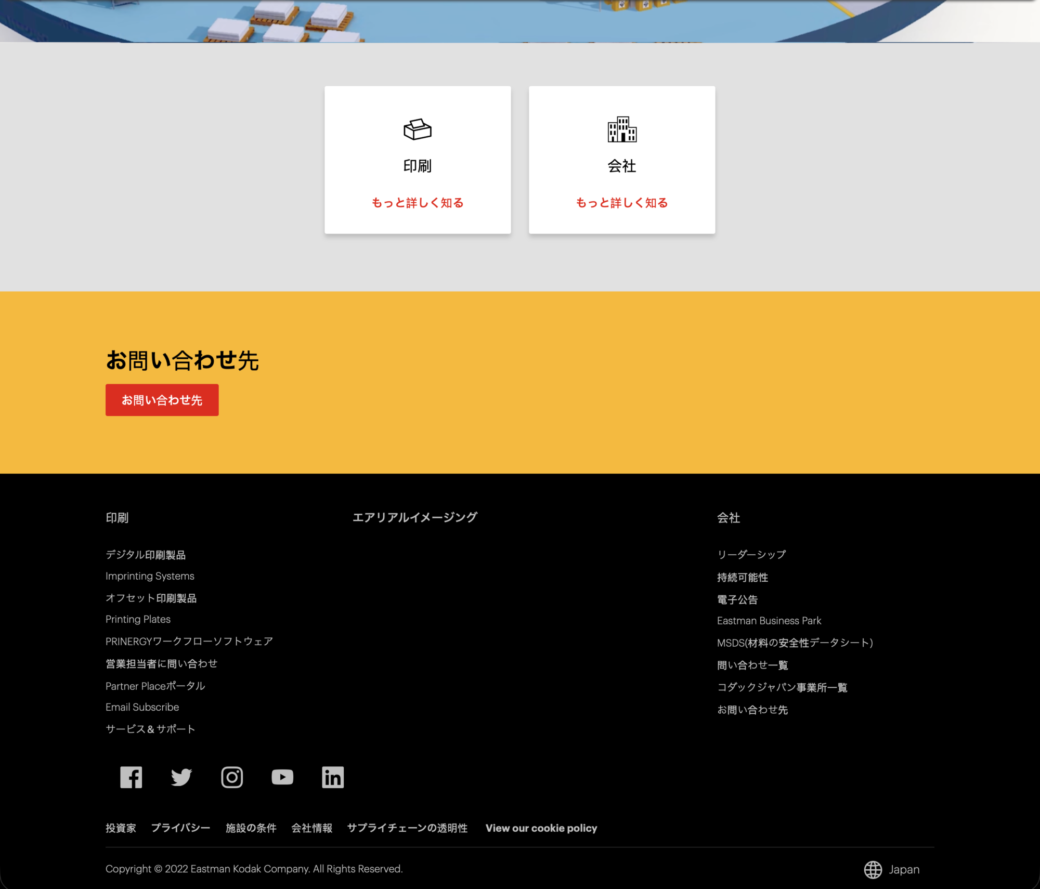
When we launched the site we developed it to support English, Korean, Mandrin, and Japanese. In the future, new languages would be added, so we had to make sure fields and pages could be translated. We also had to include the ability to make some pages available in some regions and disabled in areas where the content wasn’t relevant.
While we let Craft CMS and it’s multi-site feature do a lot of this heavy lifting, the amount of fields and the type of content we were creating really pushed the platform to its limits.
What I Did
I was involved in this project from the very beginning. From being a big part of the original pitch meetings, to meeting with the client’s IT teams, I did a lot to help earn this business for the agency. Once development began, my friends, Marc, Rachael, Megan, and I became this inseparable unit that chipped away at the mountain of development tasks in front of us.
We created most of the front-end using Vue.js (eventually we transitioned the site to Nuxt.js) and the back-end in Craft CMS. We worked with another company to handle the DevOps and infrastructure of the site, so we could focus on content modeling and the front-end work.
On the front-end we created dozens of Vue components and used all of the performance and accessibility tricks we knew to make the site performant and capable of handling many different variations of the components we built.
Fin
There’s a whole lot more that went into this project than I can put in this blog post. The phrase working around the clock comes to mind as we worked on this throughout the onset and much of the first year of COVID. We had a ton of work to complete and a lot of major life changes to navigate, so Marc and I became a well-oiled machine of Vue templating and CSS styling.
I learned a lot throughout this project and it was a highlight of my time at Dixon Schwabl. It was also a very personal win for me. In college I took photography lessons and developed my prints on Kodak paper. I had a job in the photo center of a pharmacy developing prints, using Kodak chemicals and processes. My first two digital cameras were Kodak brand and they sparked my life-long hobby and provided me with many great memories. So walking through the halls of Kodak and meeting with the team felt surreal at times.
Kodak has seen its share of ups and downs, but they are still here and doing what they do best. I’m glad I got to play a tiny little part in their story.